Episode Transcript
[00:00:00] Speaker A: Hey, everyone. Welcome back to the Inchstones podcast. You know, ABA is one of these three letter acronyms in the autism world, is so widely used and understood, and at the same time, it's really one of the most debated things in autism. And I think the more we have conversations around it and why and why not, it should not be so polarized. We sometimes can miss the questions that parents actually need help answering. You know, what does good ABA look like? What should we be teaching? What when it comes to actually building healthy skill and meaningful skills across both in center and at home, versus just simply teaching compliance? And how do we make sure that we're truly understanding. What I love about everything is what's underneath the behavior before we try to change it. And my guest today is Leah Gross. She brings a particularly interesting perspective because she is trained both as an occupational therapist and. And a bcba.
[00:00:58] Speaker B: I love that combo.
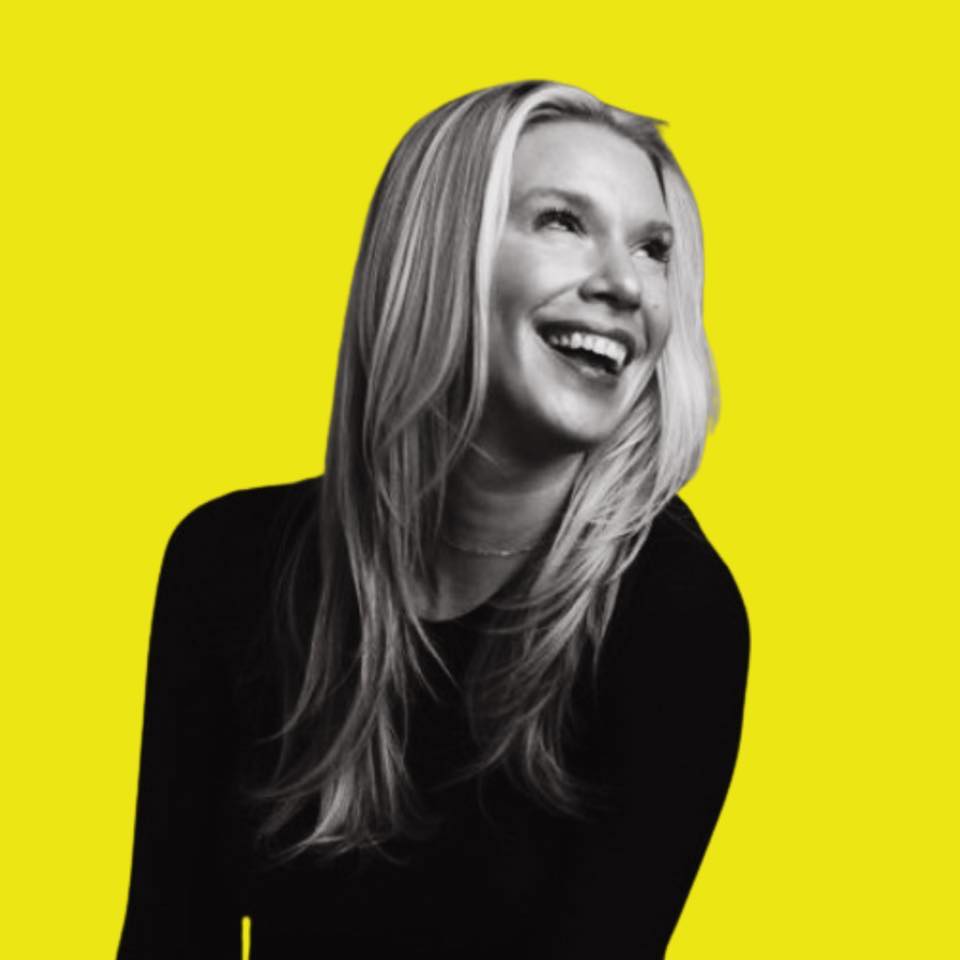
[00:00:59] Speaker A: I love that combo. And she's also the founder of Circle Care Services, which provides ABA and support to autistic children and their families. We're going to talk today about a lot of things, but really how ABA has evolved and what it looks like here in 2026, all behaviors, communication, nervous system regulation, and really what ethical individualized therapy should actually look like. Because ultimately this comes down to is what we're doing helping this particular child have greater agency, safety, communication, and deep access to their own life. So, Leah, I'm so thankful to welcome you to here onto the Inch Zones podcast.
[00:01:37] Speaker B: Wow. I love, I love all that you had to say as far as introducing us because, you know, it's such a controversial field and people have so many mixed messages about it. And I feel like the way you summed it up, it sounds like just the same, the same view as I have.
[00:01:53] Speaker A: Well, that, that I, I truly, truly believe that there is nothing that is out there right now that we cannot learn to understand from the vantage point of deeply helping the kids. So, I mean, again, like what I said to you, the first sentence there is that. I mean, you've such a cool dual, dual education and what led you to here to be a OT and a bcba? Talk to me about that. Like, how did your occupational therapy background change the way you then saw and understood behavior and happening underneath it?
[00:02:24] Speaker B: Okay, so firstly, thanks for having me on today and allowing me to share my knowledge and thoughts and journey with your audience. So I started out in 2009. I graduated Towson University as an occupational therapist, and my heart is still there. I love occupational therapy. It's such a great field with such creative minds, very open hearts. When explaining occupational therapists, I would say their personality is that too where we're always like sort of trying to figure out how to improve the skills of when we're going to talk about children or adults. But here we'll talk, we'll primarily focus on children because that's, that's where I'm at today. So we're always trying to figure out how can we better this child's life. The skills of daily living is what we call them. And if you know any, any place where a child is sort of lagging, the occupational therapist uses her creative mind to figure out what adaptations does this child need? Is it the environment? Is, is it the physical? Is it changing a chair? Is it changing moving the child around in the room? Is the scissor incorrect? Are we going to go ahead and put in a different scissor? Are we going to teach them the skills? Are we going to strengthen their hands? So when I'm wearing my occupational therapy hat, I'm sort of just a problem solver as far as how can I better this child's daily routine?
[00:03:45] Speaker A: Where are the holes?
[00:03:47] Speaker B: Where are their difficulties in that child's daily routine and how can I fix them? Now occupational therapy gets about, I would say, two half hours a week with a child.
Many times we collaborate with other professionals. So when I was treating children, I became really, really big in the sensory space because that there was a need for it. And I love sensory integration. I believe in it. I've seen such amazing results with it. Every sensory integration is what's going on in our environment and how we're able to regulate our bodies.
As an occupational therapist, we would help children through teaching them and their parents how to get them to self regulation. What self regulation? Attention and focus to task. Whatever task I'm doing, I'm able to be regulated, to be in a state of attention, to complete that task.
So we had different therapists coming in and out and right through the occupational therapy lens, we were trying to regulate children, get them to be able to attend and focus on. And we would blame behavior or attach behaviors to regulation, which is definitely there. And I still believe in it. And we're still doing that in my ABA practice today. We'll talk about that in a minute, how we got to aba. But at the time, I'm getting about two half hours a week, not enough for these children. And I'm seeing these therapists come in to collaborate and I'm giving them over my regulation programs. My, my fine Motor programs, my gross motor programs.
And, and they're getting so many hours with the children. I'm like, ha, I, I want to be able to get that many hours with the children and I want to be able to problem solve with them where these behaviors are coming from. And like the, with ABA therapists and with BCBAs, I definitely thought that they, you know, the BCBAs are a little bit more rigid. They could really use a lot of what us occupational therapists have, which is more of a fluid mind, more of a creative mind, more of an open mind.
[00:05:43] Speaker A: And it's also about like taking in like you're saying like this around any of us, like any of us is going to affect how we behave. And I think that that does not, that is not divorce from, from children, specifically autistic children for sure.
[00:05:59] Speaker B: And just like I always like to explain sensory as like the stimuli that is coming into our guts and, you know, the lights and the noise and the movement and the rustle and the amount of people in the room. And for children that have a lower threshold of being able to process all that sensory information coming in, sometimes we really need to quiet the room for them to attend. Sometimes we really need to understand where their focus is and how to connect with them. Right? But the environment is huge in attention. And then like I was saying, the BCBAs were really focusing on the behavior, the behavior, the behavior, but where's this behavior coming from? And you know, in my OT mind, I was like, okay, guys, listen to me, because I know all the information, I want to share it with you because I really know that the environment is right. So. And I wanted those hours and I really wanted to work with the children to get them to meet, meet their goals. You know, in order for children to meet their goals, they need hours of work best. They need to really build those skills. And they're not skills that get built in an hour. They're skills that need time and effort and little inch movement, little inch movement. And every win is a win towards the bigger win.
But we definitely, you know, need to build at the pace of that child.
During COVID time, it got quiet in my occupational therapy practice and I said, hey, maybe now is a good time to add in the aba. So I went ahead and did that and I collaborated with other BCBAs that had that broad mind perspective of let's look at this whole child. Let's not just look at one little piece of the child. Let's not look at the behavior or just the environment or just the parents or just the Skills. A child's a whole picture. And if we don't look at the whole child, we're definitely missing a piece. And within the child, besides for those outside factors, there's so much going in a child's brain. There's the processing, there's the vision, there's the comprehension, there's the communication, there's the social. Like there's so many pieces of a child.
[00:08:04] Speaker A: Yeah. There's so there's so many systems. And then you take it that the system of the child and then place it into a larger system. What you're saying is the environment, who their parents are, how their school setup is, you know, there's so many different systems within itself.
[00:08:18] Speaker B: Yeah. So like there's the internal stimuli and then there's the external stimuli. Internal systems and there is the external system. So children are complicated and, and to, I mean children, individuals are complicated. We're all complicated beings. And if there's something that's not, you know, working out well for that individual in your day, there's a lot of different components to look at. And really stopping and looking at all those components and seeing the as a whole picture and not as a sliver of their picture is so important when understanding behaviors and when understanding progress and when understanding goals. Like where are we going with this child? You know?
[00:08:59] Speaker A: Yeah. So, so I mean that is so much information. So what ultimately when you think about this, like what, what was it that you thought in building Circle Care that you felt was really deeply missing from the way that autism services were being delivered? Was it that co treating or was it something greater that your OT brain started to see as you worked with more BCBAs as well?
[00:09:24] Speaker B: Yeah. So really my thought was that I wanted to create ABA space where every child was treated based on their individual picture with a collaborative team. So we have occupational therapy, speech therapy, OT and then we have social workers, doctor's recommendation, nutritionist recommendation and every vision, vision therapy, you know, technology. There's so many pieces in that picture and when we sort of like get stuck in our one profession and we don't open the umbrella up to all the professions and understand that we need the information from everyone to complete this whole picture, then we're lacking in our, our ability as a therapist. So.
[00:10:12] Speaker A: Well, I think that's a beautiful way and especially as a mother, I, I, I have to say this cause I think when people are, when mothers and caregivers, parents are listening and you share as the, as the leader of Circle Care and with your background, it's what I deeply believe in is that it's never going to be one certain thing that is going to create any sort of incremental progress. It's going to be a number of different variables. And when you show up for those consciously, we get to acknowledge that. Again, that's not major milestones hit every day. It's these small Inchstones of winning that are because of that really conscious choice to involve and include so many different practitioners to seeing the child.
[00:10:51] Speaker B: Exactly. And if we keep our minds open and we're ready to see the full picture and we're ready not to be flexible and not rigid. Yes, we were taught like this. No, every child is its own brand new picture and we're going to help them to finish painting it. And it doesn't have to be exactly the way that I was taught in school.
[00:11:14] Speaker A: That's right.
[00:11:15] Speaker B: And you know what's really interesting? So I went back to school in 2024 for to be. To become a BCBA. Well, 2023, 2024 and I graduated 2025. So what's very interesting is they are not teaching what you think they are teaching in, in, in school.
[00:11:38] Speaker A: I was just talking to a speech therapist about this, so please continue.
[00:11:42] Speaker B: Yeah, no, it is, there's preaching the same thing that I'm preaching. They are preaching soft skills. We need to treat children individually, kindly in, in a way that will best future, help their future, best help them progress. They are not saying be rigid. They are not saying only follow your plan. They are saying let's do it. Practitioners. We already got some negative feedback way back when that we were too rigid, that we were using punishment, that we weren't, we weren't supporting the best. But in today's day and age. No, that's not what they're preaching. They are preaching let's look at the full child. Let's use the environment to support them. Let's use ABC data, which means look at what's happening before the behavior, during the behavior and after the behavior. Let's track it. Let's see what this child's triggers are and let's see how we could help that child to better improve their behavior for the future. And it's really kind and compassionate. It's right. Definitely play based. Now coming from an occupational therapy background and I'm floor time certified DIR certified. So coming from that background, I love play and I think children's occupation is play. So yes, include that. And that is the best way for children to learn through things that are, you know, are meaningful to them and play is meaningful most the time, not always. You can't always make any rule. There's no blanket statement. Everyone is different.
But we have to really look at that child, see what interests them, and then work with that to help them meet our goals.
[00:13:17] Speaker A: You know, in terms of specifically Circle Care and what you have grown, what does the excellent modern day ABA look like? You know, if I'm a mother that has a two and a half year old that received a diagnosis that is going to be aging out of early intervention, what does choosing a place like Circle Care mean? And how can that parent, you know, distinguish between what, what should I go
[00:13:43] Speaker B: for, what should I not go for? So first, I would say that part of excellent ABA care is including everybody in that decision. The parent, the child, and the therapist. It's, it has to be, you know, a collaborative effort in creating your care plan to make it the best for your child. And a parent is with a child every single day. The parent knows what's best. As far as what is my child lacking in? What would help my child have a better life? What. What would really be meaningful to my child? And if your therapist is not asking you that question, you're at the wrong.
[00:14:21] Speaker A: Yes, you're at the wrong place. I'll tell you what, like the data that mothers and caregivers collect, we don't even realize sometimes. And we need to be asked and have in inquiry about that because we can extrapolate and tell you, oh my gosh, yeah, I have been seeing XYZ and we've all been these little lab note takers, right? We don't even realize it. And we need to. Those should be honest and part of the plan.
[00:14:44] Speaker B: Yes, parents are really important. I think that the plans. Well, well, the plans are really, really important in the beginning when we create them, that they have, you know, the perspective of all the different people. So that then we can't say, I don't like my agency because they didn't do what I wanted or they didn't help my child to continue making progress. Well, they should be collaborating with you each session. Every couple, every couple sessions or every
[00:15:11] Speaker A: week, you know, with an update.
[00:15:13] Speaker B: There should be some sort of discussion going on between you and the parents. And if you're not, that's, that's a problem. So in Circle Care services, we have excellent, excellent, trained practitioners that have supervisors that are really watching and seeing that each child is meeting their goal and that those goals are in line with what the child and the family wants as well. That is, is key. And then we talked about environment a minute ago. Circle Care offers ABA services to children in their home. At the times that work with their child, they provide them in the clinic. We have beautiful clinics throughout New Jersey and Georgia, Maryland, North Carolina. Beautiful clinics that are child friendly, warm, have beautiful gyms with swings, a place a child wants to be. Right. You, if we're dropping our child off to have a full day of therapy and learn those skills, we want it to be in a warm environment where
[00:16:13] Speaker A: that child that they're innately drawn to.
[00:16:15] Speaker B: Yeah they want to grow. And you know, it's like if, if you are motivated to do something then you're going to do that, you're going to achieve that goal that much faster than if you're not motivated. So really thinking about what are the motivators for this, what is it that speaks to this child and how are we going to help that that child reach his goals. So that's, that's definitely two big things in picking out an ABA company and, and making sure that you're at the right stop is making sure that you like the goals of your child, that your, the goals of your child is being met and that you like the environment. Sometimes we'll even go into a child's daycare. Like mom doesn't want to put in a special needs in like a sort of like a special environment they don't want to bring to the main clinic but they want the child to be out of the house because mom works. We'll go down to that child's daycare in their neighborhood and help them there. So really the environment is really, really important and then collaboration is super.
[00:17:12] Speaker A: Well and I, and I hear this in every one of your answers so beautifully is that what works for the family matters deeply. And you know I have a typical developing teenager and I've got my two with profound autism and I remember becoming a first time mom and then as a mom to children with special needs and hearing this phrase resonant, either it's two things that that works for my family or that does not work for my family. And we need to through owners and service providers like yourself, realize that we can say and have adaptations made to what works for your family. Even if it comes down to the therapist coming into the daycare. What an amazing opportunity to be supported outside in a team collabor of effort and then be brought into the place where they have this inclusive environment that they are feel that, that that environment feels safe and warm and welcome for them too.
[00:18:04] Speaker B: Exactly, exactly. And even furthermore we want we want to support them in growing their social skills skills. So let's say we're able to be in a reg. In a, in a typical daycare and support them like that. Or I've had therapists go to the park with the children and meet up there too. So we have to really think out of the box and think what is the best environment for this child to further their communication skills, to further their social skills, to further their fine motor, gross motor, whatever skills it is that we're working on to help that child get to the best version of them. And you know, that's also a really great topic that I would love to touch on which is the great, greatest version of them. Like, you know, parents, therapists making realistic expectations of what a child's growth will be. You know, each individual child is so special and it's so amazing and they're the best them and we're really there as therapists and as parents to support them in being the best them.
And you know, not every end picture is going to look exactly the same. And it's important for us to manage expectations to really understand what is the truest and best version of my child and share that with your therapist so that we can help you get there.
[00:19:25] Speaker A: Right. So talk me through the steps. Maybe a new family received the diagnosis. What does it look like if they're coming to Circle Care for services and what they should expect upon maybe that first call or first email to start the process?
[00:19:39] Speaker B: Yeah, it's really quite simple. They could call in. We're www.circlecareservices.com or you can look us up on the web. We're everywhere at. And you go ahead and make that first phone call and you, you are, you get an intake with a very kind, friendly voice on the other end. And you know, that is actually one of my pet peeves is that the office staff has to be just as kind the therapist because you know, for a parent to actually reach out and take that time.
[00:20:09] Speaker A: That's right.
[00:20:10] Speaker B: Really busy schedule. Find a time that no one's screaming, no one's yelling, no one's pulling on my skirt or, or asking and even
[00:20:18] Speaker A: to know that it's not real energetic thing to be able to even make that first call as someone who has been there, that takes a lot of grit because it's, it's loaded. It's a loaded call.
[00:20:29] Speaker B: Loaded. So yeah and we have really trained professionals picking up the phone and being very kind and compassionate, taking in your information.
[00:20:40] Speaker A: It's.
[00:20:40] Speaker B: They're going to ask you for your insurance. Because insurance space, that was one of my visions of Circle Care as well, is that child should be able to receive these services regardless of their financial status. So all insurances are accepted.
They'll call in with their insurance card and they need an autism diagnosis in order to receive ABA therapy. That's like just state mandated. I wish I could give it to everybody, but that's just the way it is. And then they're going to take the history down. And as soon as service, as soon as all information that is requested, you know your intake form, your insurance and your diagnosis is given in, you're put in touch with a care coordinator who's going to be with you your entire stay at Circle Care.
[00:21:23] Speaker A: Amazing. Yeah.
[00:21:25] Speaker B: And that individual works to set up your evaluation. And then once the evaluation is set, you're matched up with an rbt. So the BCBA does the evaluation and then that's the one that's going to make your plan. So she'll discuss with you all your, your concerns, behavior. She'll come in, she'll observe, she'll. She'll work with you in that evaluation to create an amazing care plan. And then following that, you're paired with an RBT who will come in. They could come in anywhere between 10 and I would say it's between 10 and 40 hours. No one really is getting unless they're in a daycare. But between 10 and 40 hours of real help for this child, focusing on the plan and implementing it. And throughout the process, your care coordinator will be reaching out and checking in. How's it going? Do you have any trouble?
Are you happy with your therapist? Is there anything falling through the cracks? And that I found, I feel is
[00:22:26] Speaker A: super important because, yeah, that kind of continuity of care I can tell you. And I'm sure I know I can speak for most moms and caregivers to know that there is a person that's not just the mother's eyes weaving and continuing that thread through all the services is a. It's almost like a virtual Xanax. It's a very calming thing to be able to have.
[00:22:48] Speaker B: Yes.
[00:22:48] Speaker A: I'm so glad that you guys provide that because to be able to go to one person who understands the entire system is massive.
[00:22:55] Speaker B: That, yeah, really, really, really important. And also, like I said, I really think shout out to all the moms out there that are, you know, coordinating a plan for their child with autism. It's not easy. Day to day isn't easy. I was a therapist on the floor. I Got to see the children, the parents, the struggle, the frustration. And, you know, you could know it all in your head. He's not doing it because he wants to do it. He's not behaving because it's a choice. Nonetheless, it's a full day. It's a hard day.
[00:23:27] Speaker A: That's right.
[00:23:28] Speaker B: Taxing day. And to have someone on the other end be able to be compassionate and to really help you coordinate those services while holding your hand is super important.
[00:23:39] Speaker A: You. You bring me to the. Actually, this is a great bridge to the next question. But, you know, Circle Care, I know that you have hundreds of families and you place so much beautiful emphasis on supporting caregivers as well as the children. Why is this parent understanding and support so important to you all? And what makes that different than not just simply giving, you know, extra work or to these exhausted parents to, you know, to implement at home? Like, what is it about supporting the caregivers that makes Circle Care different?
[00:24:09] Speaker B: Yes. So in creating my program right away, parents are key here, if you ask me, because children are super important. Obviously, they're the main thing that we're focusing on here. But a parent's with a child every single day. A parent cares for that child with. With love, with. With compassion, with understanding. Right. Many people can't understand that child. Mom understands that child and can translate for you. Right. So what it does to us, like, if mom is not bought into the program, if mom doesn't want this program, if mom doesn't see value in this program, then there is no value in this program.
So it's really so important that parents are the drivers here, that parents really fuel their children's therapy, and then they're able to carry that over in the home setting. So we're not doing therapy for therapy's sake. We're doing therapy in order to better this child's life.
[00:25:05] Speaker A: Life.
[00:25:06] Speaker B: Life, yes. And we're really doing therapy to. To further the skill of this child within the real world and the. In. In his real environment. Mom knows that environment. Mom is part of that environment, showing up at every, you know, every function of this child. So if mom is not a contributing factor, if mom doesn't understand the behaviors, understand how to control the behaviors, understand how to manage the behaviors, understand why the behaviors are happening, then, you know, everything we do in the therapy room is not all that important because the child's not going to be in therapy forever.
[00:25:42] Speaker A: Yeah. I mean, generalization is so huge. And as someone who.
I don't think I realized that at first, I Know, a lot of parents don't realize that by being honest about what your home life looks like. You know, I have been the mom that never allowed the home to just be the place where we isolated. We were out and about, we were getting into the community, we were traveling. And that honesty, that of me sharing, that allowed for the skills that were built in center to translate into what is generalized for my family. And I think that's what you're saying is that that's not gonna look the same for all. You know, some families, I'm sure, have a ton of extended family around that's always together or they're traveling to grandma's house or they're going to the aunt's house. That doesn't. That wasn't and is not what my family looks like. But being honest about that allows for what I hear you saying, that generalized behavior.
[00:26:30] Speaker B: Generalized behavior. And. Exactly. And if we don't get that information from the parent. Yes, parent. Isn't. Isn't doing the things that we're doing in the therapy session.
[00:26:39] Speaker A: It's not augmenting.
[00:26:40] Speaker B: Then there's no fluidity here. So we do weekly caregiver training.
I have a podcast that the. That I do as well to help educate parents. What resources are out there in the community for you? You have a question on. On vision, Go listen to the podcast on vision. You have a question on feeding, Go listen to the podcast on feeding. You have a question on communication.
Go ahead and listen to podcasts on communication. Because there are so many different places and things and different issues, and each child is so individualized. And I feel like parents sometimes do need a little help, a little hand holding. Roadmap. Where do I go?
[00:27:20] Speaker A: Yeah, and it's nice that because you are the creator of Circle Care, I do believe deeply in the power of community. And so when the leader is sharing that from, like a inclusive community for the caregivers, like you're saying, for questions about vision, for questions about generalization, for questions about any sort of activity, it's nice to know that you have episodes and resources that they can go to in one spot. And that again, it takes the guessing of where to look for that. And it's all in one place.
[00:27:50] Speaker B: Exactly, exactly. One other thing that we haven't touched on that I would love to touch on for one minute is, is behavior root of behavior? And, you know, like, I really always love to tell parents that, you know, if they could, they would, you know, be compassionate to yourself.
[00:28:06] Speaker A: Say that again because, yeah, it's really true.
[00:28:10] Speaker B: Like you know, there's the children that like, you know, they're non verbal, they can't talk. Right. And you know that you see grandma or someone who really doesn't understand saying like say it, say it, say it. Right. And it's not going to happen. Right. We really, if they could, they would. And you know, at Circle Care, like on the communication end will work with, you know, AAC devices, PECs, but we really have to meet every child at where they are and at their level and really, you know, get into that child's brain and understand that they want to so badly. It's not because they're being bad, it's not because they're getting at you. It's really because they don't have those skills. And through ABA therapy, through the different therapies, we could empower them by actually giving them those skills and might never be verbal. We have other tools to help them to communicate, to help them to be able to express their wants, their needs, which leads to a much better life. Right. If I, if I could tell you what I want.
[00:29:14] Speaker A: Yes, yes. And, and we can. And you know, all behavior is communication and when, when we can look at it again, having a full team can seem daunting and overwhelming. But the more eyes to understand what that child is communicating and then allow them to grow skills to have better agency to then, you know, increase that communication.
It's, it's a win for all.
[00:29:36] Speaker B: It's a win for all. Yes. And so bottom line is I love ABA therapy. I do love occupational therapy as well. But what I do think is, is that ABA therapy has really grown in the past couple years. I mean year, couple years in the, in I would even say the last decade. But it really evolved and it's not what it used to be. It's not there, there is no punishment going on. There is no, you know, scary.
[00:30:05] Speaker A: I think there's a lot of the rigidity and fear that parents are going to lose this precious soul of their child because of the rote and sort of, you know, discrete trials being run. And I think that sometimes that vernacular gives it loads the gun to thinking that, you know, you're making some soldiers here when that's not the case.
[00:30:26] Speaker B: Not the case. Today's day and age, we're using a lot of net environment training. We're, we're really using what like child based play, child directed play. That's what you're hearing a lot of today where we're saying let's look at this child, let's look at Their goals. Let's look at their wants and needs and let's see how we could better this child's life through, through compassion, through care and through understanding and what they're
[00:30:53] Speaker A: led to, like seeing what the child naturally gravitates to. You know, I have two children. They're not twins, boy and a girl. They did not and still do not gravitate towards the same things in a, in a center based environment. There, there is no think of that in any capacity.
[00:31:08] Speaker B: No. And each individual child's different and, and, and we support that. We think that's great.
[00:31:14] Speaker A: Yes.
[00:31:14] Speaker B: They should be individual. If we were all the same, it'd be a very boring world.
[00:31:18] Speaker A: Very, very boring world. Leah, thank you so much. This is such a great conversation because I think you're giving a deeper look not in, not just for, for Circle Care, but for the entire methodology behind aba. And I, and I really like, can't stress enough how incredible it is to have a founder who knows occupational therapy and then chose to become a BCBA as well. That combination, I know is very rare. And I think in finding a practitioner in a place that will be of service to your child for ABA therapy, I can think of no greater of a person and founder to lead that path because having those two different degrees and mindsets is like such an amplification of understanding and deep, deep care. And you know, a child doesn't stop being part of a family when their therapy session ends. You know, and parents shouldn't be left trying to connect all these pieces on their own.
[00:32:10] Speaker B: I always say my best advertisement is discharging. That's right. All my children to go back out into the community. I want them to be functioning at the best level. For them to be able to say Circle Care helped me get here. I don't want to stay in therapy for the rest of their life. No, that's not, you know, that's definitely not a goal of ours. Our goal is let's, that's reach our reach, our skill set. Our best skill set. Learn the things that we need in order to thrive in my environment and then go out there and live your best life.
[00:32:43] Speaker A: That's right. Because you know, there's something incredible about having a therapy provider that doesn't define success based on how long you stay, but by how much confidence and independence and communication is built and gained along the way. And I really want to stress that parents that are listening and are trying to navigate ABA or simply figure out what that next support looks like. I hope this conversation better gives them Better, you know, answers to the questions they're seeking because a clearer sense of what individualized family centered care is out there. And I'm just, yeah, so thankful for the work that you're doing to build Circle Care.
[00:33:17] Speaker B: Yeah, it's my greatest privilege. Whenever I go out there and I see my, my past clients in the community, that that is what really gives me fulfillment in life, to see them, you know, out there using their skills and navigating life in a positive way where they're able to sometimes even give back to the community as well, which is really special.
[00:33:39] Speaker A: I'm sure that that is such a huge validation and a huge win for you too. If there's anything else that you'd like to share with everyone. And we'll be putting all of the details on how you can reach out to Circle Care for services as well as Leah's internal podcast options and resources for families. If anyone specifically needs any sort of questions answered, I would highly advise you go and seek out what they have to offer.
[00:34:02] Speaker B: Yes, reach out. We'd love to hear from you. We'd love to help you in any way. You know, like I said, we have the podcast. We also have different sort of resources.
If you go onto our website, we've. We have a sensory certification for different places that are. We have certified as places that understand with autism, such as dentists, such as here, places, places to take your child on a Sunday or a day off onto the website. Look it up. I'm really out there for the children. I'm out there for the parents. And if you ever have, like, any ideas that are really missing within the autism community, please reach out because I'm here. I'm here for you guys.
[00:34:43] Speaker A: Awesome. Well, Leah, thank you again for your work and for joining us here today on the Inchstones podcast.
[00:34:48] Speaker B: Thank you. Thank you so much. You are awesome.