Episode Transcript
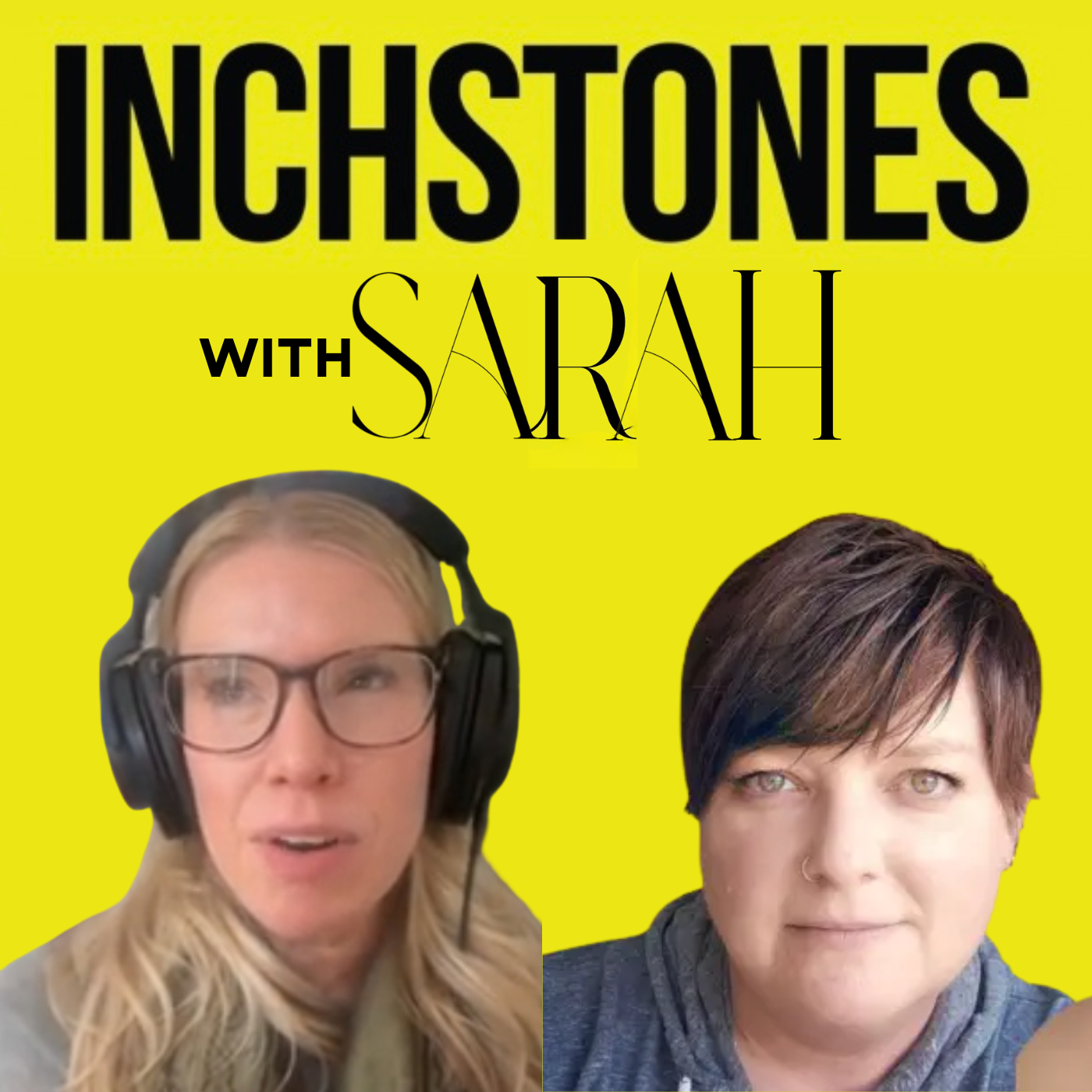
[00:00:00] Speaker A: Hey, everyone. Welcome back to the Inchstones podcast. I'm live here from my rental. As you know, I've been going home renovations due to a sewer leak. And it's not going to stop me from having these conversations with other mothers and caregivers here on the platform because it is so important to me that we continue to always expand this community and never seek to stop the stories from coming. And I am thrilled here that I have recently come into connection with Elise Davis on the beautiful big Instagram social media world, and she is a mother of children with autism as well. Well. And is really telling the truth. It's one of the things I like about you, Elise. You just tell the truth. And I think that's why many of us recently gravitated towards your account, is that you are able to share in a way that made people stop and go, wait a second, she's right.
[00:00:50] Speaker B: Yeah.
[00:00:50] Speaker A: And I really thank you for that and thank you for. For joining us here today on Inch Duns.
[00:00:55] Speaker B: Thank you so much for having me. It really feels like such an honor. I.
When I first made my infamous Holland Post, I did not expect it to go the way it did. I actually expected a lot of backlash because I feel until now, I felt like I really didn't align with a lot of parents in the disability community. I just.
We hear a lot of platitudes like, you know, this is. It's such a blessing and your child's a superhero and things that make other people feel better, and they kind of just crush us even more. And so I walked around in this community in the beginning and was just like, I don't feel like any of these people. Even when I would connect with people in real life, it just seemed like, like you said, I'm very honest and I'm very blunt. And I learned along my journey that sugarcoating it and trying to fake a life that we didn't have was not going to work for. And, yeah, I think that that is, like, the reason I started to speak out on this page. I started it fresh in April, actually, after spending 10 years on my personal Instagram and trying to have these conversations. And it just wasn't landing because I think the people following me at that point were people that made up different parts of my life, and they didn't really want to see the hard parts.
And so I wanted to be really honest and really raw about the experiences and find out, like, are there other people that feel the same way as me out here? And something that always stopped me, which I'M sure a lot of us can relate to was family members and I would talk about it, and family members would be so uncomfortable about the. The truth of our story that they would ask us not to speak about it. And so that kept me quiet for. You're making the face. Kept me quiet for many, many, many years. And so now we're this. And this is really the first time that I've opened up so completely and an outpouring, an absolute outpouring of people that are like, me too. I've always felt this way. No one ever talks about this. And I'm just blown away. And it's been such a privilege to get to be this sort of speakerphone for so many people that don't have the confidence to speak up yet or don't have the safety to speak up yet.
[00:03:26] Speaker A: Yeah, I mean. I mean, you hit on so many things there. I think what we said before we pressed record is that, you know, Inchstones has always been about.
Yes and, and the complexity of this journey and really getting curious about the ability to hold multiple emotions about the realities of this life and not give weighted, like, strength to one or the other. Like, it's all allowed to exist. Right. Like, I was reading a book that was talking about, like, how, you know, emotions are, like, in a room, right? And like, if you feel something, like, flooded with, like, I, I, to be completely honest, have felt a lot of grief recently over this. I haven't had that in a very long time. And I'm realizing that, like, sometimes when these waves come in, they sort of fill you, right? Like, it's like, becomes, like the contain, like you become filled with this grief. But at the same time, there really is a lot of, like, moments of, like, deep joy too. But sometimes the, the overwhelming one does become your body becomes that container of it. And I think that, you know, what you just shared speaks to that is that it's going to have and contain so many things, but we have to be given the space and container with other people that have the capacity to be activated by the same things. Because I think when you ask family members, relatives, other typical parents in the community to understand that, it's not that they don't want to, it's that they don't have the capacity for a reality that they don't live. Would you agree with that?
[00:04:59] Speaker B: Absolutely. I mean, just think of us before we had our children, and even with both of our firstborn, our. Our neurotypical child and, you know, you got all. You got to play out all the Hopes and the dreams and the things. And there wasn't a second of grief or, you know, in my honesty, disappointment that you weren't going to be able to do the things and have the life and their future and just, I mean, there's a million things that you don't get to do. And I often say to my husband, like, when we're in the midst of a big situation, it's mind blowing to me how I can feel such rage at some points and also be so unbelievably in love with this creature at the same time. Like, how can I be so frustrated and also think you're the most adorable thing I've ever seen? And you know, like you're saying our capacity to stretch our range of emotions and also like our range of regulation. I think, like, we can be clear up here, but know that we have to stay smaller and quieter to try and help them. Do we get it perfect every time? Absolutely not. But I always would either be one or the other. I'd fly off the handle or I'd be happy, and there was no in between. And I think that's one of the biggest things that disability parents acquire.
And I talked about this in a reel of mine too, is how. How much we are stretched as a person, much we grow and are. You're forced to figure it out. I would not have the skills and behaviors and even like the emotional capacity that I have today if it weren't for Mia.
[00:06:50] Speaker A: Yeah, I think, I mean, it's. It's when you sit by, like, in a skill set way. Right. Like, you think about how we gain muscle or gain agility in any, any sense, like there always is pain involved in that. And I think sometimes because the pain of the typical doesn't ever really go away, and because we're in a world that's surrounded by that, sometimes that pain can feel fresh. I don't know about you, but, like, I have to really consciously buffer that a little bit more. A lot more inner self talk about the typical reality and what that pain might look like. And while, you know, reacting or centering in a way to respond to my child doesn't mean that someone else is not going through their own painful journey too. I think there's a lot of. There's just a lot of conscious choice that has to go alongside the growth.
And the truth is, is that it's not going away. Like, I. I think that's what I woke up recently. Like maybe the past couple weeks, I've had some really big neuropsych evaluations from the kids. And I think it really just hit me that, oh my gosh, this is not ever going to stop.
[00:07:56] Speaker B: Yeah, I think really sobering for me
[00:07:59] Speaker A: recently because I've talked about this like I, Elise, like I talk about this like, you know, it's one of those things where it hits you and you're like, whoa, whoa, whoa, go listen to your own keynote, Sarah. But that's not, that's not how life works.
[00:08:10] Speaker B: Right, right.
And I think what's so interesting about that is that you get into these spaces where you maybe plateau for a little while and it's a good plateau. Things are calm, they're sleeping more, you know, they're communicating better.
And then you have something changes, you know, and you're right back into that rock bottom kind of feeling again. And it always catches me off guard as well, because I get so. I think no matter how much we've accepted this, I think somewhere inside you're always craving, for lack of a better word than normal. You know, especially I think, when you have one neurotypical child and you got a taste of it, or as we talk about in my one reel, Holland and Italy.
I have Italy and I have Holland. And sometimes Holland starts to feel a little like Italy. And I'm hoping and I'm hoping and I'm thinking, but it's never going to be. And it hits you, like you said, like in waves. It's. You think, it's. You're making it, you're doing okay. But even with all the advancement that they can make and the accomplish accomplishments that they do achieve, there's still just always gonna be this bubble around them and around us, I think the grace
[00:09:36] Speaker A: that has to be given to ourselves. And it's something that I'm really working on, this current chapter right now, is that like the sine waves, you know, that that's human. That's to be human. That's literally a pulse that's like quantum, like physics. I mean, it's just how the world. It's literally how the world works. And so to not give yourself grace during those points where it does feel like a. Like a valley would be denying yourself of a gift that you get to give yourself when you do feel like it's all coming to a bottom apex point. I wanted to touch on something that we were emailing about that I feel deeply. Is that having a foot in Holland afoot in Italy, a typical neurodivergent child sometimes feels like it's actually two single children, two only children. Being raised. And I feel that tremendously my kids are all two and a half years apart almost to the date. And that gap between my oldest daughter Morgan, who's 13 now and her sister Milly who's 11 and a half or 11 is very pronounced now if you were to see them next to each other.
And Milly is also my of stature smallest like charts. And my daughter Morgan is exponentially tall. And that gap in how they present almost looks like about 10 years. And it only looks greater with her and her brother obviously.
And I wanna, I wonder what your thoughts are on that because I really do feel, and it's not that I choose it, it's sort of just how it has evolved is that there's the bucket of Sarah as the mother to Morgan and the bucket of Sarah for Milly and Mac. And I do as much as I can to integrate those. But the truth is, is that the needs are so, so, so different that the integration hits my capacity a lot. Most days that I have to almost silo the differences because my typical daughter deserves different things. And it's not wrong, it's just that she does deserve different things than, than the other kids do. And by default, if you were to look, yeah, they're almost being raised as, as. As only children.
[00:11:52] Speaker B: Yeah, I mean I feel like you just spoke right from my soul because I feel a thousand percent the same way in every single thing that you said. I just. Mia is 9 and Cooper is going to be 12. That's a very close and typical children gap and same thing. They might as well be 10 years apart.
I think like any family, we try our hardest to integrate them as much as possible. But the reality for us is that our family does better when we're not all together.
Things are a lot harder when the four of us are together. If Mia is one on one really with any of us, she does much better. And it extent we joke a little because it does stem to be the common denominator is usually me. But I am her, you know, main point of contact and her person and her, you know, Mia uses sign language primarily to speak and I am the one that knows it the most. My, our son knows a lot and can communicate with her but you know, dad hasn't caught on to it as well. So I'm always the point person.
You know, that's a whole other conversation of the. The default parent situation in disability parenthood. But Cooper has to go without often because we can't do it with Mia. We can't take Mia. Mia can't handle that, you know, and Mia, on the flip side, gets away. Gets away with things, I think, you know, because the battle and the meltdown that will ensue is not worth everybody's well being, as we've learned. So, you know, like, just. Even just something as simple as screen time, like, Mia is just unlimited screen time all the time. It's what keeps her happy. It's kind of what keeps her level.
And that's it. Like, Cooper is a preteen. We have to regulate his screen time. He would be on all day long. He doesn't need to be. Things like that. Like, Cooper, Mia has a really hard time when Cooper has a friend over. So we've had to, like, stop letting him have friends over. If he wants to have a friend, he has to go to their house or they have to go across the street to the park because Mia wants to monopolize that. It's. It's. We often say it's the Mia show all the time. It's world. We're just living in it. And yeah, even just like, developmentally and their milestones, you know, Cooper just hit every single milestone right on point, if not early. Did everything, you know, as expected.
And then Mia came along, and it was like, I mean, totally different from the second I was even pregnant with her.
[00:14:38] Speaker A: Wow.
[00:14:40] Speaker B: And so something. Such a similar life. But Mia, actually, she doesn't have an autism diagnosis, but she's missing a part of her brain, and it mimics autism so much. And which one of the questions that you had sent me having, like, I. We don't have a place to be because Mia isn't autistic, but Mia isn't disabled enough, you know, so we're always in, like, this weird space where sometimes with the autistic community, they're like, yeah, but you don't really have autism, so you don't get it. And I'm like, yeah, but I really do. I really, really do.
And often, little backstory, often her diagnosis, which is agenesis of the corpus callosum, is misdiagnosed as autism, or what they used to call Asperger's before you can only detect it with an MRI. So up until what, the last 20 years, maybe so many people. It's actually the most common brain abnormality, but it's not commonly diagnosed or misdiagnosed. Right.
[00:15:48] Speaker A: Well, also, and this is the expansion of this conversation, though, and I'm so glad you hit on this, is that. I mean, this is where we could go a thousand different versions here.
[00:15:57] Speaker B: This is really trying to reel myself
[00:15:58] Speaker A: in like this spectrum. Neurodiversity, comorbidities, you know, whole body apraxia.
I'm so sorry. Remind me of your daughter's condition.
[00:16:09] Speaker B: Atypical a agenesis of the corpus callosum. Now it's cool.
[00:16:14] Speaker A: Can all present in all these different ways in a child who is still growing and like getting larger. Like I always say, like if you saw my children flat on a 2D picture and caught them at the right moment, there is not a single thing that would say to you. Autism and full body dyspraxia.
[00:16:34] Speaker B: Right.
[00:16:35] Speaker A: I'm sure you can say the same for Mia. And the, the, the problem is that because of that flat nature ability, that expansion of this is becoming so broad. Which I'm so thankful that we can talk about. Neuro, neuro, you know, diversity in this way. But sometimes it swings. And what brings me pain to hear you say is that you then are put in a position where then you don't fit in. Which is so ridiculous. Which is so absolutely ridiculous because you're seriously experiencing a wildly divergent parenting journey that sits likely so nestled closely to what autism is. What really is that these days. Right. Because I, I often think that Milly and Mac, it's more their apraxia and dyspraxia than autism. Like I would love to just for their oral motor planning disabilities, not the autism. Right. And so I wonder, you know, that I know that we're sitting in a time and space these days in our world that we have to sort of allow for these complexities to be discussed because it's not necessarily autism. It might be something much more com. Like a comorbidity than just I think
[00:17:49] Speaker B: and you know, another thing that we've experienced because at about six months old it was very clear to us that Mia was not going to be communicating like a typical child. And so I started sign language and we went through kind of the beginning signs and we just kept going. And she. Of all the things that we tried with her sign language was the one thing that she took to Mango and what's was about 2. We worked to get a, A talker tablet. And that was, you know, you, I'm sure you know to go through that process to get that. And it took almost a year and she's never really enjoyed it because the one thing that we're so grateful for, it's. I almost laugh because it's like a double edged, double edged sword is her expressive language is like beyond.
And it's way more than like Doctors ever expected.
And her receptive language, taking it in, understanding it all. She knows what you're saying to her. Everything, all the time. Expressive, getting it out. Her communication where there's like this blockage and that's where a lot of our meltdowns and frustrations stem from. Because she can't tell you what she wants. She can't just say no, I don't want that. No, I don't like that. So of course, course you know, we can understand why we have the meltdowns and the breakdowns. Doesn't make it easier, especially when they don't end. You know, you can't work your way out of them a lot of the times. But my point was trying to get sign language services for her has always been really difficult because she's not deaf or hard of hearing. And the deaf community, it's like we all have a disability. The everyone here has a disability. Why are we like in these non inclusive little groups when we're fighting for inclusion as a whole?
And then like I can't get the service for my child who clearly tests out that she benefits from it. Just like another one of those things like why we want to support each other.
[00:19:53] Speaker A: That's why I do feel, because I know there's a lot of charged thoughts on, you know, just the global inclusion, you know, space we're in right now. But I think that, and I don't know why this is something that like I, I do really feel at my core. I think we're at a point where maybe it's okay if things begin to collapse a bit for a while and there's, there's a little bit of rubble and we might be able to build something better. Because I don't think that the way in which we're going to like have a chokehold on like these, these rig rigid definitions in communities or the over expansiveness of like well, the voices, the, the loudest voices are going to speak for everyone which don't end up becoming the, the, the truth that, that just, just because they're loud as. It's the truth. And so I, I do, I do wonder if. Cause when I hear you say that you. To fight for those kind of services and fight for that level of support even when she was showing that it worked, that that is one of the most guttural things for me and I, and I'll tell you like aac, my daughter Milly ebbs and flows with it. She, she spent years that she really was, I thought going to. This was going to be her voice and she could not be bothered with it right now. She's very, very much done with it and she's fine answering yes or no to the majority of. My son has never wanted much to do with it. He will push that out of your way. He will begrudgingly use it in a very small like six by six room for speech therapy. And I wonder. And both children are getting spell to communicate now in their school and spelling. And I read a statistic recently and I'm sure you'll, I think you probably would have known this that you know, American Sign language took like 90 years to be considered even a language language. And I think that's where I'm sitting now as a mom to emergent spellers and you know, infrequent AAC usage children that we get to sit in time and space right now to say, well I'm seeing results, I'm sitting in reality. You're sitting in reality with Mia. You're seeing that sign language works.
If, if you start stripping away and being told that that doesn't exist, it really does rock your foundation of like, well, what's happening around me, if I'm seeing this, and that's what I've been seeing with my kids with spelling, is that my son, who I never thought in a million years would have taken to it, is, is accelerating quicker than my daughter is, which boggles my mind because she is two and a half years older, is a bookworm, is so much more like typically like scholastic as a, as a student. She doesn't care at all. She's, she's not into the spelling as much. So I just think that we have to sit in reality and truth more and share from that position to amplify what is possible down the road. Because I'm certain, Elise, that your story of Mia will affect others in a similar situation by, by telling the truth of it.
[00:22:56] Speaker B: Right. And I, I something that I found in her journey through school age is that talking with other parents and they have non verbal children. And I'd say, well, have you ever considered sign language? And the, one of the most popular comments is that well, I don't know how to access it or they told us we can't have it because she can hear. He, he's not, he's not hard of hearing. And you know, I did a reel recently about how the pushback system, how, how often do parents just give up.
Not because we're not trying and not because we don't want to help our kids, but because the I'm not, I'm not the, the disability law professional. I know what I need to know for my child, but a lot of people can't figure that out. And that's okay. We all have our strengths in, in that area. But the system pushes back on you so much that you're like, well, you're the professional. If you say so. I guess when we first started kindergarten. Now our team has been phenomenal for the last four years and. But it took us a minute to get there and I just was never gonna back down. But I remember sitting in that initial meeting to get me a registered for kindergarten and talk about what we were doing. And first off, they wanted us to just register her and get her in and then we'll do evaluations and we'll figure out what she needs. And I said, absolutely not. I'm not sending my kid to school school with nothing in place and gonna like, yeah, play it by ear. And that was another thing. Like our district does this cute thing where you can ride the bus with your kid on their first day of kindergarten. And I, there was several other students on the bus that still needed five point harnesses. So, you know, I knew that things were going on and I asked the parents, what do you guys have set up for the school year? Nothing. They said, we'll get started and see how it goes. And I'm always blown away. Like, people just don't realize what you can push for because the system tells us, no, you can't have that. So sign language was the biggest one they said. I said, mia is pretty fluent in American Sign Language. That's what we've always used for her to communicate. So she's going to need an interpreter for school. And they laugh.
They were like, oh no, we don't do that unless we have a hard of hearing or deaf student. She'll just use an aac. And I was like, no. And they were for like, if I would have been like, okay and just back down, that's what their plan would have been. And then I would have had a child struggling and having meltdowns all the time because that's not her preferred mode of communication. And I fought and fought and fought.
Had to get in a disability advocate, the whole shebang. And then all of a sudden we had an interpreter.
And so I'm like, if it is available, why couldn't we just have it when she tests? They had, we went through so many evaluations, so many things, and they were like, oh yeah, she actually does use sign langu.
Yes.
[00:25:44] Speaker A: And we Were like, yeah, I think, you know, I, I do, I do a lot of one on one IEP planning for, for families. And to your exact point, what rises all the time is when I create these parent statements, you know, cause that's a legal part to be included.
Like half of them don't even realize they're allowed to have those submitted before their IEP meeting.
And I realized that it changes the entire terrain of a meeting when the parent statement has clarity and robust, really just like stoic, logical tone to what the services and needs are. And unfortunately to your point is that the system is going to reward, reward you if you just play along with what they're comfortable doing. And so if comfort and ease for them for the system is best, they will push for that until the friction point becomes to like breaks basically. And that also then is another reason to go back to what we originally started with, which is the capacity, which is that that is then shouldered by the mothers and caregivers typically of the disabled child. And it becomes a.
You're like a self looking. We become like self looking ice cream cones because we're just constantly seeing the
[00:27:02] Speaker B: next drop circle all the time. And then every grade it starts over. Every transition it starts over.
You know, we're going through the whole thing again because in our district, third grade starts a whole new building and a whole new team. So we've had to go through that whole process. And you're right, it's just I have to start, you know, you get that, okay, I'm ready, let's do this. And you put on your big girl pants and your tough face and you go in and do it. Like I said. Thankfully I have a reputation with our district and our team now and everything is understood. But me too.
But you know, it's so sad to me how many parents don't have that and don't know that they can do it. There's, you know, hundreds of comments in one of my reels about this type of thing about when you go to an IEP or an evaluation and you have to sort of pick apart your child and you highlight all their difficulties rather than all the beautiful things that they can do and how hard that is for us to do.
And there was so many comments of parents saying like, yeah, and what's even worse is having your child in there for the iep. And I said, excuse me, what?
Why? Why are your children in there? There's absolutely no reason they should be in there for the IEP meeting.
And they're like, oh yeah, they always, they have to be. And I'm like, no, no. And I've had other great people like you, Sarah, who are well versed in IEP and have mentioned like, I do this or I do this and you can reach out to me and I've said in reply to comments, please go through these comments and find the other women that are helping families with IEPs because you're being bulldozed. And that is not, that's not real.
[00:28:45] Speaker A: No, again, it's, it's rewarded this like the, like, again, it's not even like a certain person. I was like this. It's really just the system. If you're, if the system is rewarded by the, by the, by the way in which they communicate or don't communicate, all the abilities of the parents, it's just going to, it keeps the comfort level of the system going. And that's how. What I, I mean, I believe it's a decaying system, right? Because we, we're just going to decay. We're going to decay down to basically re. Realistically just containing the children. We're not really even encouraging their growth. But, but when, when you step back and you realize that, you know, the, your voice does matter and that you are a part of that panel and the, the, your voice actually can, like I always. The term is like, shape the terrain. Like, if you can go in realizing that I'm not here to defend or be argumentative, I'm actually here to just uphold the truth and the reality of my child. It does, it will change and it's not immediate. Like I, like I always say to clients, like, this isn't going to be like a one email thing and then everything's going to be fine. Like, it's going to take some back and forth and that's what's missing. We should be in community with our children's care teams and their iep. It should not be always defensive. It should be symbiotic and it should be dialogue. Hard conversations are not unsafe. We can have hard conversations and we can keep pushing the.
At least. I'm really thankful that you have been so vocal and you are genuinely such a, you know, a champion for not only your daughter Mia, but I think that you're giving, like you said, a voice to others and we need more of us doing exactly that.
Before I let you go. What, what was something that you would want another mom to know that's maybe entering on this journey with their own child to know?
[00:30:44] Speaker B: Something that I think about for myself a lot is that When I think about us in the beginning, I think that I. I thought our life was over. And at this point, I can look back and say, it's gotten better. It's hard. Every day is still hard. Things have changed so much every year. She changes more and more. It's weird to say because it's not gonna get better, but it just changes. And the hard is less hard in different ways.
You know, it's not that easy to wrap up in a pretty bow, I think, and be like, it'll get better, but you won't feel the way you feel right now in the beginning. And, you know, I said that in my Holland post, too. That Holland poem is maybe not for you to read in the very beginning of your disability parenthood journey, but nine, 10 years later, you can go back and look at it, and you can realize that Italy never had anything on Holland to begin with.
[00:31:49] Speaker A: That's right. That's right. I'm glad that you shared that, because I think all of us can. Can. Can take something away.
Whatever part of your journey on that, it's going to change, and it's not gonna always feel the same. And that's actually a really good thing. Raising children, you know, with different needs, oftentimes meaning, like we said, holding grief and joy, hope and deep uncertainty, and there's really no perfect balance. What I always say is only unconditional love and showing up again and again and again and again.
So, Elise, thank you so much for being here today on Inchstones and thank you to everyone for listening. Until next time, everyone, keep noticing your own Inchstones and have a wonderful day.
[00:32:28] Speaker B: Thank you, Sarah.