Episode Transcript
[00:00:01] Speaker A: Hey, everyone. Welcome back to the Inch Zones podcast.
Every month, I feel so fortunate enough to share the stories of clinicians, therapists, family members, speech language pathologists, anyone tied to the autism community that would provide support, understanding and guidance to anyone that is touched by autism.
For the month of May, I've decided to make a very clear intent for Inchstones to share specifically the stories of women and mothers and their exact journeys for their children with autism.
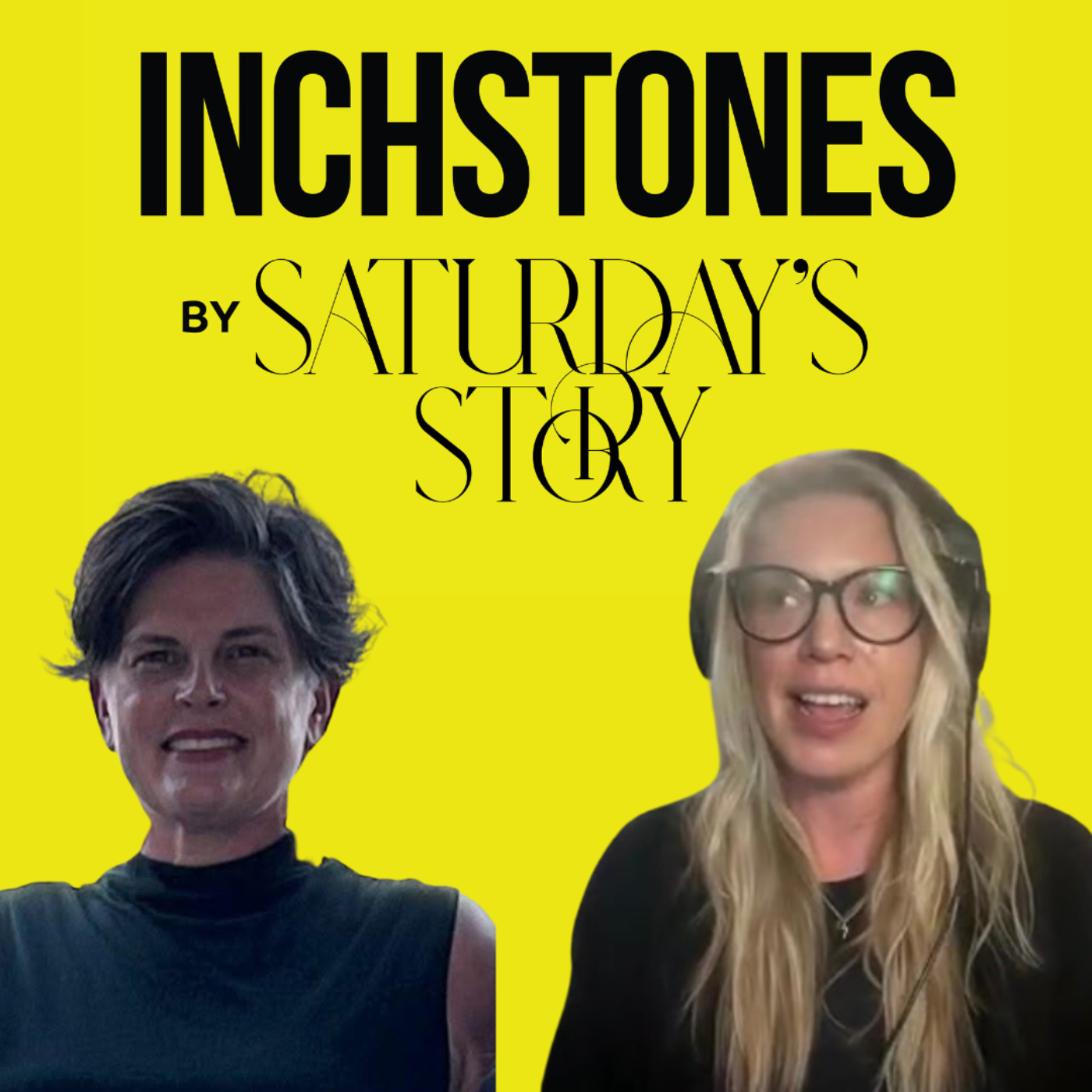
We are going to laugh, we're going to cry, and we are going to sit deeply in the fact that this is a complex journey that was never on our bingo cards. Yet getting to show up for it has become one of the most expansive life lessons and life experiences. And today, as my number one first interview for the month of May, I have my dear friend Lori Dove here. Lori and I are Jersey moms who are raising children on the spectrum in various capacities. Yet when Lori came into my world, it was apparent that we were simpatico on a number of levels, but mostly and most aligned with our enthusiasm for sharing what is possible. Lori started the account Everyday Autism Essentials, where she shares on Instagram a lot of very incredible regulation skills, tactics, alongside her daughter, Liberty.
Lori, I am so happy to have you here today to get back to what your core is, which is, number one, you are a mother of children with autism.
[00:01:40] Speaker B: Thank you. And it is a pleasure to be here. So, so thank you so much for having me and I'm excited to continue to talk. Um, I, I often say I, you know, nobody wishes this upon anyone, but I wouldn't change my experience for anything. The people that I've gotten to meet, especially you and all the families that I talk to and the people that I help and just to continue, you know, sharing our stories, to feel seen, heard, and more importantly, and we were, you were chatting a little bit just to evolve through and the milestones that we hit and the Inchstones that we are really intentional about. So. Than. Thank you.
[00:02:16] Speaker A: Well, let's take it back to the beginning.
[00:02:19] Speaker B: Yeah.
[00:02:20] Speaker A: What was the moment that you realized first that your child's path might be different than what you expected?
[00:02:27] Speaker B: You know, my.
Mine was very similar to probably so many. Right. Concerns met with some milestones not being met. They were very obvious. This was 16. No, I guess 15 years ago. Our son now is 16, so. So, you know, probably around that year Mark, when you're really starting to take note of the different milestones and just concerns around that. The thing that got me when I tell this story, I got caught in a lie. I Lied to my pediatrician, not even realizing what I did. I'll tell you. Cause when I. When I say it like a story, it was a well visit. You know, your typical well visit. Pediatrician comes in, how's it going? Has her little note card, you know, noting down things. So how many words does he have? I said five. Now, I didn't think I was lying. I'm pretty certain I heard the word ball and I kind of thought I heard him say mom or milk or something. So I said five.
Couple months later, we return for that. Another, you know, well, visitor checkup. And same question with the note card. So how many words does he have? I say 10 again. I'm pretty sure I heard him say da, da. And, you know, the other, you know, milestone words.
Well, a couple weeks later, we were there for a sick visit. And I had no. Please, I had no idea what I was doing. This was certainly not intentional.
[00:03:46] Speaker A: Oh, it's through the lens. She doesn't say. The intent was that you were sharing. You were just sharing and it was coming out and you were.
[00:03:52] Speaker B: Yeah, And I. I wanted to hear those words. I wanted those to be five, then ten words. Well, we went there and sure enough, she asks me, so how many words? And I said five.
Not remembering, of course, that I had said 10 months ago. And she said, so he's losing words. And I'm so grateful. Obviously, in that story, it's. It's got not humor to it, but it's. It's real. You want to hear stories or you hear the boys are different than girls. And your cousin's brother's niece had the. Well, so the journey started like anyone else, and it went very fast. It was diagnosis, you know, to services. And I'll zoom through this part because I think our journey was what alike a lot are. It was immediate early intervention. It was sitting around the, you know, dining room table talking about services, getting the services, fighting for the services, getting offered very little services, but not stopping until I maximize them. I'm talking seven days a week, 40 plus hours a week, an unheard of amount. And that, you know, when I look at Sarah and I, I mean, we, you know, it's. But I. I thought so long. And this is where the start of my journey for some of these other things that have come past. Now, I know there are so many families that would have probably when they offered me six hours a week of early intervention, I know so many people, so many people, Sarah, that would have said thank you, they would have been so happy for that. And I was. But I knew enough to fight anyway. The journey for us was very steady. Through our transition to schools, we were very lucky. So through this journey, we didn't really have the fight that we sometimes hear about or some of the other challenges on top of just the day to day. So I was very blessed to have that journey and was offering so many people. I always say, remember that show, that Regis Philman original show, who Wants to Be a Millionaire? And I'm sure you were the. I, I almost immediately became the phone friend for anyone who was in and around this journey, whether it was concerns or they had just started. And I took that responsibility with such, with such pride. I took it very seriously, offering, you know, a sense of steady and guidance to anybody who called. And fast forward 10 years later to our second child. Oh, our third child, but now second getting diagnosed. And this. Sarah, this is really where my story shifted because first, their diagnosis was so different.
And that's where I think the first point I want to make to your audience is when you're talking to someone or you're meeting your community, and even Sarah and I, our stories are so different. Yours with profound autism, mine, you know, more of a level one, you know, you know, was. But we, we connected so immediately. And I think that I, you know, that's where I certainly stay. And I know in our community there is, there are divides, and I'm sure you could speak more to that. But for me, I never, I never felt one. Even though the diagnosis could be just so different. Because in my home, it was so different.
Yeah, it was the same diagnosis.
[00:07:22] Speaker A: Right. I think that why I love hearing any mother's story that a lot that has of children with autism is that this foundational shift that happens whether your child goes on to have level 3 profound autism, comorbidities of, of epilepsy or deep full body apraxia, dyspraxia, or, you know, higher functioning, lower support needs, autism, whatever that is. You were a mother in a pediatrician's office experiencing a child showing you who they were, that was so radically different from what your expectations are. And that emotional shift that, that physical regulation, worry, stress hormones that run through a mother's body are no different whether your child is on one end of this vessel or the other. And I think that's what I, I would love to hear more about. Like, what did that season feel like for you? What did that like emotionally, physically, spiritually like? Because that's where we're. No, no one's. No mother's different in this.
[00:08:24] Speaker B: Yeah. So, you know, for. For me, in the beginning with. With our son, it was.
I had blinders on.
I was, you know, just so focused on him and his progress and his therapies and the services and battling insurances and school districts and getting him from point A to point B that I really neglected not only myself, which wasn't even a concern. I would. Back of the line, you know, where we go. But I did neglect my neurotypical child.
Um, and. And, you know, we were. Lila was a guest not too long ago on. On your podcast, and we. We talked about that, and there was a lot of resentment. There are a couple of words that we talk about today that people really cling on to. I want this to be one of them resentment. Because this is where. When you say, what did it feel like? There was a lot of resentment going in a lot of different directions. My. My neurotypical child looking, you know, why. Why is my brother. Why is her brother getting so much more attention? Why is it different for him? Why. You know, all of those? And you can. You can parent those off to, you know, lots of explanations, but just remember that that's. That's growing inside of her. The resentment, you know, that both my husband and I, you know, experienced. And I have the most amazing partner. But, you know, was that. Was that business trip necessary? There was, you know, those tiny little resentments, you know, or vice versa. I didn't take time for myself. But, you know, those things are deadly cancers that will run through.
So those are probably the, you know,
[00:10:11] Speaker A: like, to your point, like, they stack. It wasn't that you were just receiving this information about your son and then forging a path for him to grow and develop with all these different supports and scaffolding. It's what's happening within that scaffolding to the other players in the family and how that stacks emotionally. And when you're in it, and you know, you and I are still in it, right? Like our children are still here. It's. It's very hard to divorce all those different things that are happening, right? And how these emotionally have such deep interplay with each other.
[00:10:43] Speaker B: So. So, you know, and then. And then to ourselves. And again, I. When I say we worry about ourselves last, we do. But this is the second thing that if any, if hopefully everyone's listening to the next thing that is so, so important, and that is regulation. And it is not just a buzzword. It is. It is a biological truth.
[00:11:03] Speaker A: Literally everything.
[00:11:05] Speaker B: It is a biological truth that there is that if you and these words that we hear all the time, regulation, co regulation, dysregulation, is it behavioral or is it dysregulation or. All of these things are so important, where we are so fast to get services and speech and language and OTN, PTN, you know, the IEPs and all the, and all of the things.
I'm not taking away a single one of those things.
But equally as important at the same exact time is knowing how and what triggers you, the regulation techniques that you need because your child cannot and will not anchor to your regulated nervous system because they cannot regulate theirs. Right? That is, that is all that is biologically happening. And it is so important to know how to do it, what triggers you, how the people around you can stay regulated. All of these things, again, are biological because in order to get maximum success to all the things, I mean, like your kids, my kids were the hardest working kids in showbiz. I need speech to ot, back to speech to this one. Someone's at the house, they go there, but if they're dysregulated, they didn't hear a word.
You know, it's, it's so hard for them to, you know, take on additional load. So, you know, these are the things that I talk about. These are the things I got excellent at. I mean, I don't mean to flex, Sarah, but I am really good at regulating my nervous system.
[00:12:40] Speaker A: It is, it is one of your Olympic level gold medals. And it's why I believe that so many flock to your platform and showing that.
Because the truth is, is that when, when dysregulation runs so fast and thick through your child's body, whether we want to pass off or hand off our children to have respite or schooling provided, whatever the case is, we are their home. And I do firmly believe that mothers and caregivers are the neurological pulse of, of a home. And so when the mother and caregiver is regulated, that does translate to the child. Now, it doesn't mean that they're going to be fully regulated themselves just because of how you model, but you do such an incredible job of showing how verbally that looks like, what it looks like posturally, what that looks like from the internal script that's running through your head.
And I think that, you know, what you're showing is that that has an effect not just on you, but on your child every single time you choose to do the harder, more pause. Regulatory reaction.
[00:13:48] Speaker B: Yeah. And I'm not just, you know, talking about, you know, you know, going to, going For a walk or playing tennis. And anybody who knows me, that's, you know, that's certainly mine. And that is a new thing in my life, right, Because I really started to do the work to find out what regulates my body. And it is movement, it is connection, it is all of the things that I can get from that. So you find your way. But I'm all, I'm talking about regulation in the moment. Because if I'm asked one question over and over and over and over again is how do you stay so calm? And first of all, I do not. And we all lose it. There isn't a single person that I've talked to, including myself, that hasn't just lost it because they are overwhelmed by, you know, wherever they are in the day or the moment. But by and large, you know, staying regulated, staying in those really intense moments is what I, I do like. And that's, you know, can be uncomfortable to watch. But that's probably what I get asked most. How do you stay so calm in those, in those really hard moments? And some of the techniques that I talk about, when I do share them, it's almost as if nobody's ever heard them before. And I, I, I'll share a few if it will be helpful. And, and it's. So when people listen, they say, um, yeah, that I can, I can do that one thing right there. So the very first thing that I, I do is validate.
I validate whatever it is that is going on.
I say it out loud, validate. Thank you for telling me you're upset. Thank you for showing me you don't want. Whether the receptive or the expressive communication of your child can understand.
Just by saying it out loud releases the hold and the control that it has on my nervous system. I'm saying it out loud to say that's why I feel the way that I do. Right? Give it, give into it.
[00:15:35] Speaker A: Because if you don't containment of that, then it doesn't amplify to be this overarching story of everything. You just name the specificity of it, which is so huge for regulation.
[00:15:47] Speaker B: That's the specificity really quick. Because then you don't do the se. The very first thing I talked about, which is resentment, because you will inevitably, whether you resent that moment or yourself for losing it, because we all have, right later that night, an hour later, you go, you know what? Who was that person? So that is, you know, definitely some of the those first, you know, techniques that I, when I talk to people and they say just how do you do it? If you start with that and release it, it's, it's such a first step to. And then, you know, you feel so much better about where the next step. And then you can build upon that.
[00:16:27] Speaker A: So if the first step is naming the.
[00:16:30] Speaker B: Name it to tame it.
[00:16:32] Speaker A: Name it to tame it. Okay, so then what's next?
[00:16:35] Speaker B: So the next thing is the harder or the more intense the pull or the dysregulation of your child.
Think of a string.
You're connected always with a string to your child, and the harder they pull at it, you never let go, but you give in a little bit.
The louder or the harder, the softer and the gentler you get. And you let into that and it's a dance that you can find. And this is also a perfect way to find out if it's behavioral or it's dysregulation.
Right? So if it's behavioral, the moment should likely pass, right? Because you should know the difference while they look the same, right? Tantrums, crying, or, or, but if you, you can really start to see the difference between the two. And that's all developmentally and where they are and their age and skills. But so the next step is lowering my energy and to meet. So somewhere in the middle, we get to the middle point together.
If it's a hard pull, I'm way softer, but I never let go of that imaginary string that I have that allows them to have the control that they need, that predictability.
And you're staying there, but you're almost reminding yourself, sometimes I even say out loud, she doesn't want to be acting this way.
Mm, that's right. Simple. And really it just changes your mindset for the next. However long it is because it, they can be long and intense and the parenting in us wants to creep in, right? The typical.
There needs to be a lesson or a correction. These are things that there is no room for any lesson or any correction in, in this moment, or quite frankly, right after a dysregulated moment, that is for another time, perhaps even another day for where the lesson needs to be. And by saying those things, that's really the next step. And then, then, then you just, then the next step is they tell you how long that that's going to be.
And hopefully that makes sense to you, Sarah, and your audience. And, and when you think about it and you.
Yeah, it does.
[00:18:47] Speaker A: I mean, but, but I, I, I, I'm just like, I'm bursting to interject here because I want to say, how did you how did you, Lori?
How did you. What. What. What made you the. The mother that can harness this talk about it like, what. What is it about you that you've known your entire life that makes you so perfect to be in Liberty's mom in this moment. And I'm gonna cry because this is so much more than Liberty and you sharing about how those moments work. Name entertainment, sitting in with her, giving the slack to. To. To. To bend to the. The regulation and. And know what it needs. How did you become you to do that?
[00:19:30] Speaker B: It's really.
That's really kind, Sarah, to say.
[00:19:34] Speaker A: It's true. It's so true.
[00:19:36] Speaker B: I think. I think it ultimately comes down to, as we get older, is how I wished I was parented. I was a deep feeling kid. And while I was not neurodivergent and didn't struggle with, you know, what my children struggle with, I felt deep.
Often, you know, was looked at as a behavioral problem. You know, I was the jokester in the class because I could get the laugh or I, you know, I just, I felt always the way. So many of the people that I talk to, you know, on my platform, especially, you know, young adult autistic who say, oh, I wish you were like my mom. And, you know, they're very kind, beautiful things, and that can resonate. So when I had this opportunity, especially the second time around with my second child being diagnosed, I think that.
Right. That. And where I was able to really, you know, go back to what kind of parent I needed to show up as for my children, coupled with the knowledge of what I learned from my son.
Right. I mean, I have my BCBA by association.
You know, I. I am not a therapist. I don't have any of these wonderful credentials, and I wish that I did, but I surrounded myself with the best. Sure did.
And so.
So that coupled with the second diagnosis and knowing that they were just so different and that this and this needed to change for us to all succeed as a family.
Right. Because, you know, it was. I guess it was that. I. I mean, I like to think so. It was very kind. I, you know, I still, I.
[00:21:23] Speaker A: No, I just think that there's any accidents in this world. I really do not believe there's any accidents. And whether there is a timeline of grief and evolution and interpretation of this journey, I. I'm so deeply convinced that there's no accidents that you and I were given, the children that we are given and that the mothers that are out there that are listening know that you get to do this. And some Part of you has always been made and meant to do this for your children. And, you know, it's not a toxic positivity to say that.
I've always known that there's such a depth of humanity inside every individual that I've ever known growing up. And I always, I think from, you know, to answer my own question, like, I just always saw how deeply everyone has the possibility to feel and be in this world and for you to share that. Like, you always knew that you were such a deeply feeling individual that you had the capacity in some ways to relate and to engage and to elicit a positive reaction or a positive experience in engaging with others. It's no surprise that you have children that beg that of you. And then you get to do it.
[00:22:36] Speaker B: Yeah. Thank you. And, and then do it because it just doesn't exist. I've looked high and low, Sarah, for others. And while there's, there's other great platforms on, you know, regulation and, you know, other topics that circle this, I think as it's specific to our community, it's, it was, it was a need and it was my pleasure to fulfill and.
[00:23:00] Speaker A: Oh, you're meeting it so beautiful.
[00:23:02] Speaker B: And continue to do this work and to build coursework for families and siblings, you know, you know that that's really important to my eldest daughter as well, who, you know, I think those voices are so important and the childhood that, you know, they are having is going to make such a big impact. So, yeah, it's, it's, it's a, it's so much more to go and I'm so glad that it's resonating with so many people.
[00:23:30] Speaker A: If you were to have a mother come to you today whose son or daughter is newly diagnosed and they're in that fight or flight mode of what the heck am I going to do with an autistic child?
What is something you say to those mothers and caregivers?
[00:23:47] Speaker B: I would say that you are, you are not alone.
I think that's really important. There's a, there's just such a huge community.
Find your community and follow and find all different types of communities because every piece of it will resonate somewhere. Don't just, again, as it evolves, whether it's profound or where you are open, open it up.
I think we are better in numbers. So that's. First, you're not, you know, you're not alone. And I would say the second thing is just really, as best you can, remove any resentment that will be an obstacle for your growth, for your child as well, whether those are existing relationships and friendships and family members, you know, explain and. And really, the information is there for you to help educate those around you that can support you the best way. So don't let them be obstacles.
[00:24:50] Speaker A: Yeah. I mean, one of my foundational pillars is the more we interact, the less isolated we feel.
And that can. That can be for quite little, I think, any quote, unquote problem in life. Right. That the more we interact and realize that we're not alone, the less isolated we feel in this silo of fear and resentment and control and wonder of what the next thing is happening.
And so I'm so glad that you touched on that, because I think when these.
And it will continue to happen to mothers like you and I, who never in a million years thought this would be our reality.
The more that you find these pockets of community, the more that you are open to hearing others talk about what goes on in their homes and what they experience in the doctor's offices or in the therapy offices, the more you realize our world is so vast and is so open and is so loving.
Because when you share, you dissipate that fear and grief, not in a way to say it's not there, but in a way to integrate it into your life so that it doesn't consume your life well.
[00:26:00] Speaker B: And again, it's naming it. Give it a name. Don't you know when you do that and you say it out loud and you validate all the feelings, they won't have a hold on you that either hold you down or hold you back or make you scared.
Say it.
[00:26:15] Speaker A: Yeah.
[00:26:16] Speaker B: Say how you're feeling. Share it. And I think that's what I would tell anyone at this point is for me, it's essential.
[00:26:25] Speaker A: Well, on that note, because your platform is everyday autism essentials. Lori Dove, thank you so much for being here today on Inchstones. You are a pillar of strength, flexibility, evolution, and showing so deeply what is possible.
You have created a community that sees you every day and sees you with your kiddos actually practicing it, which is, I think, so foundational in how we interact with. We can't just talk about it. We have to be about it. And I'm so thrilled that you got to share more today here on the Inchstones podcast. Thank you so much for being you.
[00:27:00] Speaker B: Thank you, Sarah.
[00:27:01] Speaker A: All right, well, until next time here, everyone on the Inchstones podcast.